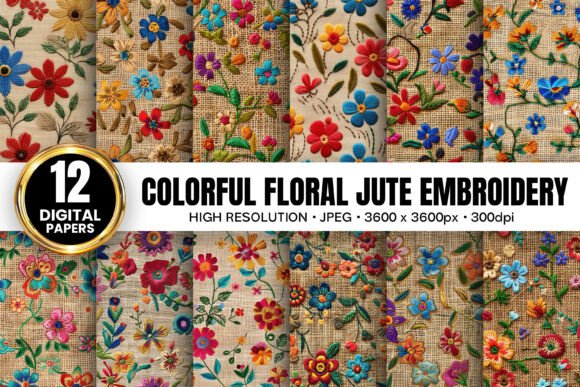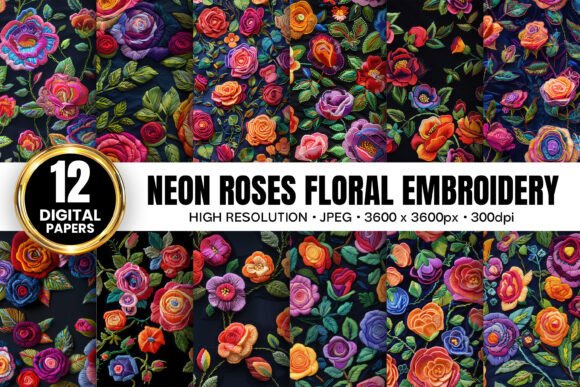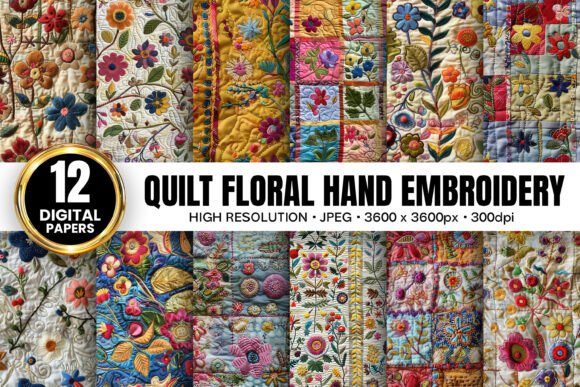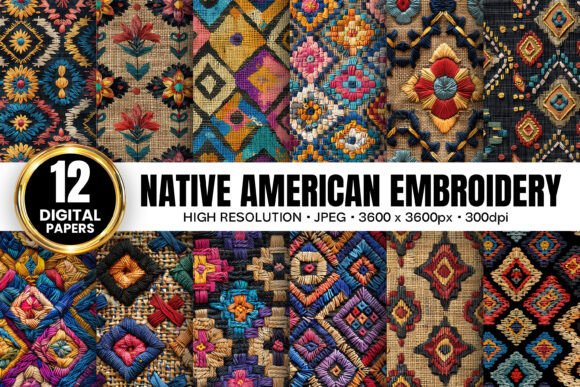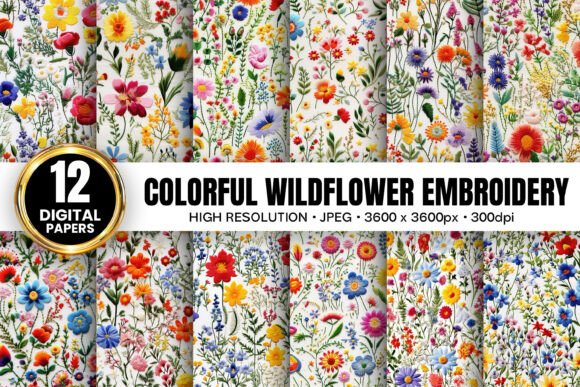
Colorful Wildflowers Embroidery Patterns for Business Merch
First Impressions: A Versatile Foundation for Brand Identity
When reviewing Colorful Wildflowers Embroidery Patterns for professional use, my first impression is that this collection strikes a powerful balance. It feels friendly and playful yet maintains a sense of rustic elegance that many small businesses strive for. The concept of wildflowers inherently communicates a handmade, natural, and approachable brand personality—perfect for a café, boutique, florist, or creative studio. As a set of high-resolution graphics, these patterns provide a professional starting point for developing a cohesive visual identity across various embroidered merchandise.
Practical Performance in Real Business Applications
The true test of any design asset is how it translates into a finished product. Based on the description, the 300 DPI and 3600x3600 pixel resolution of these patterns is a strong foundation. Here’s how Colorful Wildflowers Embroidery Patterns can perform across key business applications.
Embroidered Patches and Product Labels
For a pet brand, bakery, or handmade shop, a custom embroidered patch can elevate product packaging or serve as a customer gift. These floral patterns can be adapted into a branded patch for tote bags or aprons. The high-resolution detail should allow for clean digitization into an embroidery file, but success depends heavily on the final stitch density and how the intricate floral outlines are translated by your digitizer.
Staff Uniforms and Apparel Branding
Imagine a café’s apron or a boutique’s staff polo. Using one of these patterns as a chest logo accent or a sleeve detail injects personality into custom apparel. For a uniform, it’s less about the entire pattern and more about selecting a focal floral cluster. This creates a recognizable, yet subtle, brand mark that builds customer trust through visual consistency.
Cap Embroidery and Tote Bag Design
For event merch or retail merchandise, caps and tote bags are staples. The Colorful Wildflowers Embroidery Patterns offer a vibrant option for a cap embroidery front or a tote bag mark. However, the curved surface of a cap and the often-larger area of a tote require different approaches. A full, dense pattern might be overwhelming on a cap front, whereas it could be perfect for a tote’s center.
Considerations for Successful Embroidery Application
While the graphics are promising, their journey to a stitched product requires careful planning. Here are key areas where a business must apply an embroidery designer’s scrutiny.
Navigating Small Scales and Detailed Elements
Using these patterns for a small patch size or on a cap front is possible, but not automatic. The intricate details and potential color variety in the wildflowers might blur or lose definition when minimized. It is crucial to test the design at the intended small size in a printable mockup first, and then in a sample stitch-out. Check for clarity and whether simpler elements from the patterns should be isolated for such uses.
Ensuring Durability and Visual Impact
Items like work shirts or aprons face frequent washing. A design with very high stitch density can be stiff and less durable on flexible areas. Furthermore, applying these colorful patterns onto dark uniforms requires planning for thread color contrast and potentially using a lighter background fabric patch. Always test on real fabric with the proper stabilizer to assess the texture and longevity.
Integrating with Overall Brand Assets
Before committing, compare the embroidered sample beside your other design assets—like your logo, typography, and packaging. Does the embroidered wildflower element enhance your brand identity, feeling like a natural extension? Or does it clash? This step ensures the embroidery adds value to your handmade product presentation and boosts overall professionalism.
The Embroidery Designer's Pre-Production Checklist
As a professional handling commercial embroidery projects for clients, I follow a specific protocol before any machine runs.
- Confirm Commercial Licensing: While the product is described as graphics, you must verify the license terms for business use, especially for digital embroidery file creation and selling finished products.
- Create a Client Approval Mockup: Never proceed without a visual. Use the high-resolution files to create a realistic printable mockup of the design on the intended item—a cap, apron, or bag.
- Test in Black and White First: This simple step reveals the core structure and balance of the pattern, stripping away color bias. It helps identify if the design holds its form, which is vital for recognition.
- Review Technical Specifications: The product description does not specify exact hoop size requirements or file formats suited for embroidery machines. You must check with your digitizer or software to ensure the JPG graphics can be properly converted and that the final design fits your machine’s capabilities.
- Inspect Spacing and Color Separation: For a seamless pattern used as a focal element, assess how colors might separate into thread changes. Too many colors can increase production cost and complexity for your small business merch.
Final Assessment: Elevating Product Value and Engagement
Ultimately, Colorful Wildflowers Embroidery Patterns is a robust graphics collection with significant potential for small business merch. When applied thoughtfully—as a subtle accent on a uniform or a bold statement on a tote—it can enhance product value, reinforce a natural and creative brand identity, and increase buyer engagement through tangible, quality craftsmanship. Its success hinges not on the digital files alone, but on the meticulous translation into the physical world of thread, fabric, and thoughtful brand application.