Reviewing the Tucan Cross Stitch Bird Pattern for Business Use
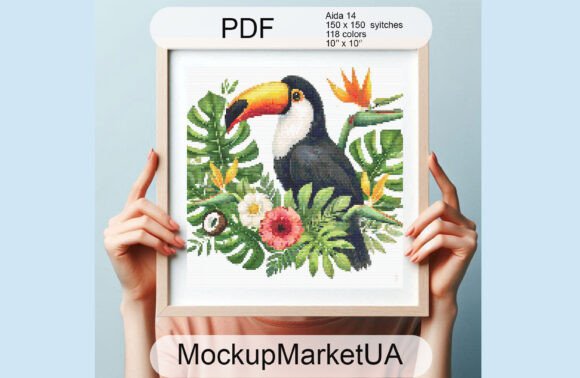
As a professional embroidery designer working with small business branding, I am constantly evaluating digital patterns for their real-world application on merchandise. When a design like the Tucan Cross Stitch Patterns PDF, Bird comes across my desk, my primary focus shifts from pure aesthetics to practical viability. This review considers this exotic bird cross stitch pattern not as a decorative craft, but as a potential asset for commercial embroidery projects.
First Impression: A Playful Yet Professional Crafted Identity
From the title and description, the Tucan Cross Stitch Patterns PDF, Bird immediately conveys a handmade, cozy, and celebratory feel. This visual personality is a powerful starting point for businesses wanting to project a friendly, creative, and artisan brand identity. For a boutique, bakery, florist, or creative studio, this pattern offers more than just a bird; it offers a crafted narrative. It feels playful enough to engage customers and rustic enough to feel authentic, which can elevate the perceived value of handmade products or small business merch. The "exotic" and "cozy" cues suggest it could work wonderfully for businesses with a tropical, natural, or warm aesthetic.
Performance in Real Business Scenarios
The true test of any digital embroidery file is how it translates onto physical products. For the Tucan Cross Stitch Patterns PDF, Bird, several applications stand out for brand-building.
Embroidered Patches and Uniform Accents
An embroidered patch based on this pattern could serve as a perfect sleeve detail on staff uniforms for a café or a chest logo accent on aprons for a bakery. Its intricate, crafted appearance adds a touch of personalized professionalism. On a cap embroidery, it could become a distinctive mark for a pet brand or a local tour company. The design’s inherent handmade presentation makes it ideal for custom apparel meant to communicate care and attention.
Tote Bags, Aprons, and Product Packaging
Stitched onto a tote bag design, this pattern transforms a simple carry-all into boutique merchandise or a customer gift. For an apron embroidery, it reinforces a brand's creative studio or handmade shop identity. As a small accent on product packaging—think a linen bag for a florist or a tag for a pet brand—it creates visual consistency and enhances buyer engagement. It can also be a central design for event merch or Etsy seller branding, offering a unique, non-generic logo alternative.
Printable Mockups and Client Presentations
Before any stitch is made, using this pattern as a printable mockup is crucial. It allows you to present the concept on digital images of caps, shirts, or tote bags to clients for approval. Integrating the Tucan Cross Stitch Patterns PDF, Bird with other design assets in a mockup helps assess how it complements your overall brand identity and customer trust.
Critical Considerations for Successful Application
While the pattern's style is promising, its successful use in commercial embroidery depends on careful technical execution. Here are key areas to scrutinize.
Scale, Density, and Fabric Compatibility
You must test how the Tucan Cross Stitch Patterns PDF, Bird performs at a small patch size. Intricate cross stitch patterns can lose definition when miniaturized for a cap front or a small product label. Stitch density is another concern; a very dense pattern might be too stiff for curved surfaces like caps or unsuitable for lightweight fabrics. Always test on real fabric—a sample apron, tote bag material, or uniform textile—using the proper stabilizer. Fabric texture also matters; a coarse linen might showcase the handmade look beautifully, while a smooth polo shirt might require adjustments.
Color Contrast and Durability
Thread color contrast is vital for recognition, especially if applied to dark uniforms. A recommended best practice is to test the design concept in black and white first to evaluate its form and readability without color dependency. For items like work shirts or aprons that need frequent washing, the pattern's detail and stitch density must be robust enough to maintain integrity over time.
Production Readiness and Licensing
Before moving to production, review spacing and implied hoop size requirements based on the pattern's dimensions. Compare it beside your other branding elements to ensure harmony. Most importantly, you must confirm commercial licensing before business use. The product description mentions "Instant Download" for embroidery, but as a business, you need explicit permission to use this machine embroidery design or its derivative for branded merchandise. Never assume; always verify the license terms included with the Tucan Cross Stitch Patterns PDF, Bird file.
Final Design Notes for Brand Integration
Integrating the Tucan Cross Stitch Patterns PDF, Bird into your business’s visual identity can strengthen customer trust and professionalism by showcasing a custom, thoughtful touch. It moves beyond generic stock art. However, its effectiveness hinges on treating it as a production file, not just a graphic. By following a disciplined process—testing scale, checking contrast, confirming licensing, and creating client mockups—you transform this cozy cross stitch PDF into a valuable, durable brand asset for your finished product line.