Gingerbread Embroidery Patterns: A Designer's Practical Review
Whenever a new set of embroidery designs lands in my library, my first question isn’t just “is it pretty?” but “how will it stitch?” As someone who creates embroidered products for clients and my own small shop, a design’s visual charm is only half the story. The real test is in the hoop, on the fabric, and in the hands of a customer. So, let’s walk through the Gingerbread Embroidery Seamless Patterns with that lens, imagining we’re preparing a real project—say, a custom holiday apron for a boutique gift shop.
The Immediate Charm and Seasonal Personality
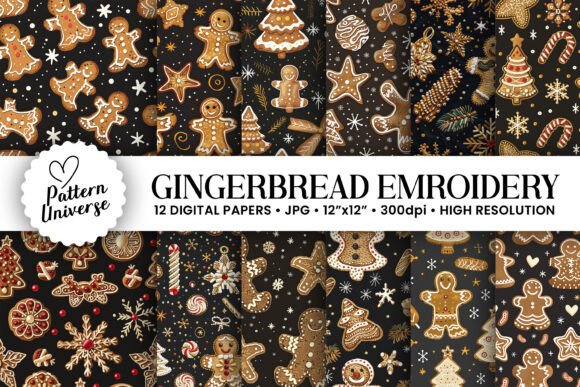
Opening these patterns, the mood is instantly warm and nostalgic. The gingerbread motifs—from classic men to houses and cookies—carry that familiar, festive personality. The seamless aspect suggests a flow, ideal for creating borders or all-over decorative textures rather than isolated icons. The shapes are generally rounded and friendly, with details that feel like they would translate well into satin stitch outlines and fill stitch interiors. My designer instinct says this isn’t a high-drama, intricate set; it’s an approachable, cheerful one. It belongs naturally to projects that evoke comfort and celebration: holiday embroidery on kitchen towels, baby embroidery on a festive onesie, or a whimsical tote bag design for carrying seasonal treats.
Where These Patterns Excel in Real Projects
Thinking through my project queue, these gingerbread graphics have clear sweet spots. Their cohesive theme makes them superb for branded collections. An Etsy seller could use them across a line of matching items—aprons, pillow covers, and tea towels—creating a strong, recognizable holiday shop aesthetic. For personalized gifts, like a family name embroidered on a gingerbread house pillow, the patterns provide a rich, themed backdrop that increases the perceived value.
On custom apparel like sweatshirts or children’s hats, the scale seems adaptable. The patterns aren’t overly massive or tiny, so they should frame a chest or sleeve nicely without overwhelming the garment. As embroidered patches, they’d be charming, likely requiring moderate stitch counts that are efficient for small-batch production. For craft business items like holiday market merchandise, these designs hit a visual note that customers actively seek in November and December—they’re immediately understandable and giftable.
A Natural Fit for Home Decor and Keepsakes
Beyond wearables, I envision these seamlessly integrating into nursery decor or a scrapbook-style junk journal background. Stitched onto a blanket corner or as a repeating border on a pillow cover, the gingerbread theme creates a cozy, handmade presentation. For digital product sellers creating printable mockups, these patterns serve as excellent, royalty-free design assets to showcase other crafts, like the mentioned gift wrapping or greeting cards, adding a layer of professional, thematic consistency to their branding.
Practical Considerations and Careful Applications
No design is universally perfect, and a practical review means noting where to proceed with caution. The likely level of detail in these gingerbread motifs means paying close attention on very small hoop sizes. Tiny features, like a cookie’s button eyes or house door details, could become dense or lost if minimized too much. They demand careful thread color contrast, especially on dark fabric backgrounds; a white or light cream satin stitch outline would be essential for clarity.
Textured fabrics like thick sweaters or stretchy fabric like knit caps could challenge the stitch definition, requiring robust stabilizer choices. On curved surfaces like caps, the seamless, flowing nature might need adjustment to fit the contour without distortion. For products destined for frequent washing, like kitchen towels or baby clothes, evaluating the stitch density is key. Overly dense fill stitches in the gingerbread shapes could make the fabric stiff or prone to puckering over time.
The Impact on Your Business and Customer Trust
Using a well-executed, thematic set like this affects more than just the stitch. It enhances visual appeal and stitching clarity, which directly boosts product value. A customer receiving a holiday gift with crisp, cheerful gingerbread embroidery perceives more care and skill, building customer trust and encouraging repeat business. For a small shop product, it aids in brand consistency if you specialize in seasonal or food-themed crafts. The giftability and instant recognition of the theme can increase buyer engagement in online listings or at craft fairs.
Notes From the Worktable Before You Stitch
Before loading the embroidery file for a client’s apron or your own commercial embroidery project, here’s my habitual checklist. First, always test the design on scrap fabric—preferably a similar weight and texture to your final product. This reveals the true stitch density and how small details like icing swirls render.
Check thread color contrast by viewing the design in black and white mockups; this highlights where definition might fail. Compare light and dark fabric backgrounds mentally—sometimes a design needs a slight color palette shift for different bases. Confirm the licensing terms for the digital embroidery file before selling finished items or incorporating it into other digital products; this is a non-negotiable step for professional craft business operation.
Finally, inspect the design layout for your specific use. If creating a seamless border on a pillow cover, does the repeat work mathematically for your pillow’s dimensions? For an embroidered patch, does the motif have a clean, closed outline that will look finished when cut? These practical judgments turn a good machine embroidery design into a successful, stress-free finished product.
Final Impression: A Festive, Functional Asset
In my hands, the Gingerbread Embroidery Seamless Patterns feel like a solid, festive asset. They aren’t overly complex, which, for many real-world embroidery projects, is a benefit. They promise efficient stitching and a result that communicates its theme clearly. They’d shine on a crisp white apron, a cozy fleece blanket, or as the decorative frame around a personalized holiday card. For the designer, crafter, and small business owner looking to add a touch of handmade holiday warmth to their offerings, this set provides a straightforward, charming foundation. Just remember to do your due diligence on the technical specs and test stitch—that’s what separates a hopeful idea from a beautifully embroidered reality.