Boho Motif Embroidery Patterns: A Designer's Review
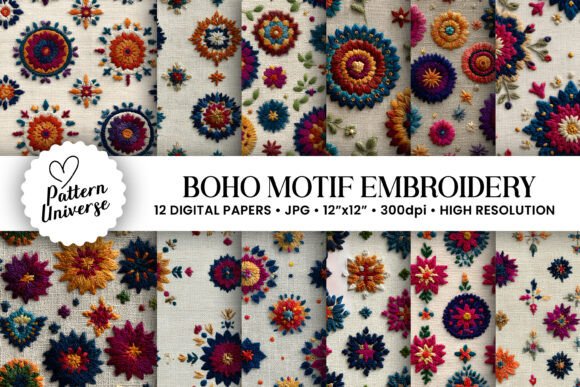
As an embroidery designer preparing for a weekend craft fair, every design in my inventory gets a real-world review. I look at it through the eyes of a customer at my booth and through the hands of a maker at my machine. Today, I'm evaluating Boho Motif Embroidery Patterns, a set of twelve seamless patterns, to see how they might perform as physical, handmade products.
The First Impression: Soft, Decorative, and Versatile
The word "Boho" immediately sets a mood. These patterns should feel soft, decorative, and artfully relaxed. They aren't bold or funny; they lean towards a rustic, elegant charm that appeals to a customer looking for something uniquely handmade but not overly formal. This aesthetic is a strong seller at markets, sitting perfectly between farmhouse warmth and modern minimalism. It feels premium without being intimidating.
When I look at a design collection described as perfect for gift wrapping, journals, and wall art, I know its core strength is visual texture. For physical embroidery, this means the motifs likely have intricate, repeatable elements that create a beautiful, all-over pattern. This is a fantastic starting point for translating digital graphics into stitched craft fair products.
Where Boho Motifs Stand Out on the Booth Table
My booth display is a mix of function and beauty: tote bags, aprons, tea towels, caps, patches, pouches, and pillow covers. The Boho Motif Embroidery Patterns need to find their best home here.
Tote Bags and Market Bags as a Canvas
A large, seamless pattern can be stunning on a tote bag. Using one of these motifs as a focal design across the front of a bag creates immediate visual impact. The boho style resonates with shoppers looking for a unique, everyday accessory. It’s important, however, to test the design on scrap fabric first. If the pattern has very dense stitch areas, it could make the bag stiff or require excessive stitching time for batch production.
The Quiet Elegance of Tea Towel Embroidery
Kitchen towels are a staple. A boho motif embroidered on the hem or corner of a towel adds a touch of handmade luxury. The design needs to be clear and durable on often textured towel fabric. Check thread contrast carefully—light threads on dark towels or vice versa—to ensure the pattern pops. This application works beautifully as a small accent, making it a quick-to-produce, high-value small shop product.
Pillow Covers and Pouches for Cozy Appeal
For home décor items like pillow covers or fabric pouches, these patterns can transform a simple item into a boutique-ready piece. A seamless pattern lends itself to a larger, centered design on a pillow. This is where the "boho" feel truly shines, creating a product that looks curated and artistic. It photographs exceptionally well for Etsy listings and online shops.
Embroidered Patches and Caps: A Considered Approach
Patches and caps are trickier. Curved cap surfaces and the smaller scale of a patch demand that the design retains clarity when minimized. If the Boho Motif Embroidery Patterns have tiny details or small, intricate lines, they might become muddled at smaller sizes. Always create at least one real mockup on the actual product. A successful boho patch, however, can be a fantastic add-on sale at a fair.
Practical Production Notes for the Maker
Turning these digital embroidery files into a lineup of handmade products requires a practical eye. Here’s what I consider before committing to a design for commercial embroidery.
Design Scale and Customer Understanding: At a busy fair, a customer should grasp the beauty of your design at a glance. Boho motifs, with their decorative nature, are immediately appealing. They work as both a large focal point on a tote and a small accent on a towel, giving you production flexibility.
Photography and Online Value: These patterns are inherently photogenic. The intricate details showcase the handmade quality and effort, increasing perceived value in your Etsy seller photos. Good photos drive booth interest too, as customers often find makers online first.
Batch Production and Repeatability: Is the design repeatable? Seamless patterns suggest it is, which is excellent for producing multiple items like sets of towels or pouches. Consistent brand consistency across your booth comes from using a cohesive design family like this.
Critical Use Notes for Embroidery Success
- Stitch Density: AI-generated patterns can sometimes create areas with overly dense stitching. Test on scrap to ensure it doesn’t pucker your fabric or require excessive thread.
- Fabric Texture: Always compare fabric colors and textures. A boho motif on a rough linen towel will behave differently than on a smooth cotton tote bag.
- Hoop Size and Stabilizer: Choose the correct hoop size for your intended product and never skip the proper stabilizer. A large pattern on a bag needs firm support.
- Thread Colors: Select a palette that enhances the boho mood—earthy tones, soft blues, muted pinks—and check contrast against your fabric choices.
- Commercial Licensing: Since this product is listed under Freebies and Graphics, it is crucial to confirm commercial licensing before selling finished products. Always verify the terms for the specific files you use.
The Final Booth Display Impact
Integrating Boho Motif Embroidery Patterns into your product lineup strengthens your booth's visual story. A cohesive theme of boho designs across different items—a towel, a bag, a pillow—creates a powerful, attractive display. This coherence boosts buyer engagement; customers see a style they love manifested in multiple useful forms.
It elevates your table from a collection of random items to a curated collection. The handmade quality is evident in the intricate stitching, and the versatility of the patterns means you can offer a range of price points, from smaller accent items to larger, statement pieces. This flexibility is key for craft fair success.
In the end, the value of any embroidery file is measured on the hoop and on the table. Boho Motif Embroidery Patterns, with their soft, decorative, and versatile nature, hold strong potential for transforming into sought-after handmade products. My designer advice is to start small: test one motif on a tea towel and a tote bag. See how it stitches, how it feels, and how it sells. That real-world test is the final, and most important, review.